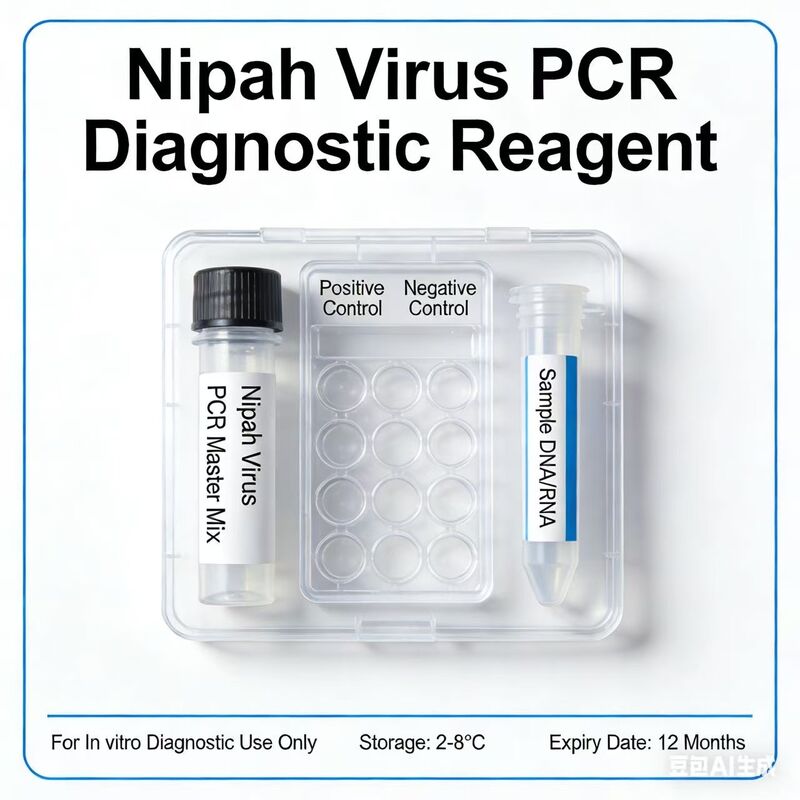
Nipah virüsü Gerçek Zamanlı RT-PCR Kits
Amaçlı Kullanım
Nipah virüsü gerçek zamanlı RT-PCR kitleri in vitro nükleik asitlerdir.
Nipah virüsü RNA' nın kaliteli tespiti için amplifikasyon testi
biyolojik malzeme (swab, kan plazma, serum, beyin-omurga sıvısı)
gerçek zamanlı melezleme-flüoresans algısı kullanarak
ürünler.
| Ürün ayrıntıları |
Açıklama |
| Teslimat |
48 saat içinde |
| Paketleme Özellikleri |
8 x 12 şerit, 96 kuyu |
| Doğum Ülkesi |
Çin |
| Üreticisi |
18 ay |
| Koruma yöntemi |
-20°C±5°C
|
| Örnek |
kan plazma, serum, beyin- omurilik sıvısı |
| Assifikasyon |
sınıf 1 |
| Türü |
pcr |
ÖZET
Nipah virüsü (NiV) negatif anlamlı, tek ipliktir.
segmentlenmemiş RNA virüsü,genomu altı genten oluşur
nükleokapsid ((N), fosfoprotein (P), matris proteini için kodlayıcı
(M), füzyon proteini (F), glikoproteini (G) ve RNA bağımlı
RNA polimeraz protein (L).
Nipah virüsü (NiV), hava yoluyla bulaşan bir zoonotik patojen.
Halen tedavi veya tedavi yöntemi bulunmamaktadır.
İnsan veya hayvanlar için onaylanmış NiV enfeksiyonuna karşı aşı,
Bu nedenle erken teşhis olası salgınların kontrol edilmesinin anahtarıdır.
NiV'nin NiV-B ve NiV-M isimli iki virüs suşunu,
Bangladeş, Hindistan ve
Her ne kadar 91.8% benzerlikleri olsa da, NiV-B
Ürünün ölüm oranının 40 ila 50 arasında olduğu tespit edilmiştir.
İnsan enfeksiyonunun erken aşamasında, spesifik olmayan semptomlar
Hastalığın ilerlemesiyle birlikte,
- Evet.
neden olabilir
Ensefalit, disortaj gibi semptomlarla,
Ağır vakalar akut krizlerle eşlik eder.
Solunum sıkıntısı sendromu. Inkubasyon süresi genellikle 4-14
Günler
İlke
Nipah virüsünün polimeraz zincir reaksiyonu (PCR) ile tespiti
RNA ekstraksiyonuna dayalı olarak test malzemesinden alınır ve daha sonra
Aynı anda
ters transkripsiyon reaksiyonunu gerçekleştirmek ve
Nipah virüsü cDNA fragmanlarının ve Internal
Hibridleşme-flüoresans algısı ile kontrol (IC) DNA.
RNA ekstraksiyon aşamasında elde edilen RNA ters transkripsiyon yapılır
Revertase enzimini kullanarak DNA'ya dönüştürülür ve daha sonra Revertase enzimine dönüştürülür.
Özel primerler ve Taq enzimini kullanarak cDNA fragmanları
Gerçek zamanlı PCR'de, güçlendirilmiş ürün tespit edilir.
ile
- Evet.
kullanımı
Bu boyalar,
Oligonükleotid probları, amplifiye edilen
ürün
sırasında
Termocycling.
Gerçek zamanlı izleme
Gerçek zamanlı PCR sırasında floresans yoğunlukları tespiti sağlar.
Reaksiyon tüplerini yeniden açmadan ürün biriktirme
PCR çalışması.
RT-PCR aşamasında, 2 reaksiyon eşzamanlı olarak
bir tüp Nipah virüsünün cDNA' sının ve içsel DNA' nın amplifikasyonu
Kontrol (IC) DNA dizilimleri. Nipah virüsünün amplifikasyon sonuçları
cDNA ve Internal Control (IC) DNA 2 farklı
Floresans algılama kanalları:
Nipah virüsünün cDNA'sı FAM kanalında, IC DNA'sı
ROX kanalında tespit edilir.

Depolama ve geçerlilik
1. Depolama: 2-8°C.
2.Üzerinde geçerlilik: altı ay


 Mesajınız 20-3.000 karakter arasında olmalıdır!
 Turkish