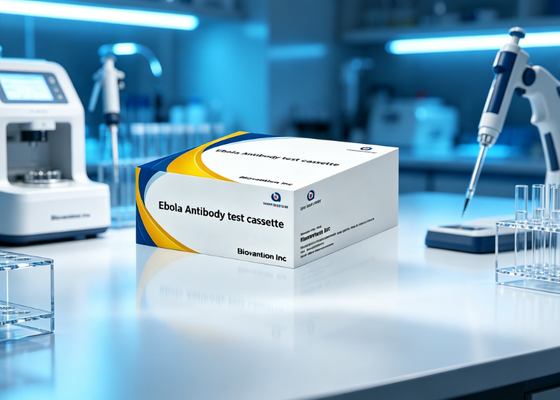
Ebola Virüsü Hızlı Test Kiti (Kolloidal Altın Yöntemi)
Ebola virüsü, tedavi edilmezse genellikle ölümcül olan akut, ciddi bir hastalığa neden olur. Ebola virüsü hastalığı (EVH) ilk kez 1976 yılında biri Sudan'ın Nzara kentinde, diğeri Kongo Demokratik Cumhuriyeti'nin Yambuku kentinde olmak üzere iki eşzamanlı salgınla ortaya çıktı. İkincisi, hastalığın adını aldığı Ebola Nehri yakınındaki bir köyde meydana geldi.
Ebolavirüs cinsi üyelerinin elektron mikrografları, onların bir filovirüsün karakteristik iplik benzeri yapısına sahip olduklarını göstermektedir. EBOV VP30 yaklaşık 288 amino asit uzunluğundadır. Virionlar genel olarak boru şeklindedir ancak genel şekil olarak değişkendir ve klasik çoban asası veya delikli cıvata, U veya 6 veya sarmal, dairesel veya dallanmış olarak görünebilir; Santrifüj gibi laboratuvar teknikleri bu oluşumların bazılarının kaynağı olabilir. Viryonların çapı genellikle 80 nm'dir ve yüzeyinden 7 ila 10 nm uzunluğunda sivri uçlar çıkaran glikoproteini sabitleyen bir lipit çift katmanı vardır. Değişken uzunluktadırlar, tipik olarak 800 nm civarındadırlar, ancak 1000 nm'ye kadar uzunlukta olabilirler. Viryonun merkezinde, NP, VP35, VP30 ve L proteinleri ile kompleks oluşturan helisel olarak sarılmış viral genomik RNA'nın oluşturduğu nükleokapsid adı verilen bir yapı bulunur. 80 nm çapındadır ve 20-30 nm çapında bir merkezi kanal içerir. Viryonun, konakçı hücre zarından türetilen dış viral zarfı üzerinde, 10 nm uzunluğunda ve 10 nm aralıklı, viral olarak kodlanmış glikoprotein (GP) sivri uçları bulunur. Zarf ve nükleokapsid arasında, matris boşluğu olarak adlandırılan alanda, VP40 ve VP24 viral proteinleri bulunur.
Filoviridae virüs ailesi 3 cins içerir: Cuevavirus, Marburgvirus ve Ebolavirus. Tespit edilmiş 5 tür bulunmaktadır: Zaire, Bundibugyo, Sudan, Reston ve Taï Ormanı. İlk 3, Bundibugyo Ebolavirüs, Zaire Ebolavirüs ve Sudan Ebolavirüs, Afrika'daki büyük salgınlarla ilişkilendirildi. 2014 Batı Afrika salgınına neden olan virüs Zaire türüne aittir.
Ebola daha sonra enfekte kişilerin kanı, salgıları, organları veya diğer vücut sıvıları ve bu sıvılarla kontamine olmuş yüzeyler ve malzemeler (örn. yatak takımları, giysiler) ile doğrudan temas yoluyla (kırılmış deri veya mukoza zarları yoluyla) insandan insana bulaşarak yayılır.
Kuluçka süresi, yani virüsün bulaşmasından semptomların başlamasına kadar geçen süre 2 ila 21 gün arasındadır. İnsanlar semptomlar gelişene kadar bulaşıcı değildir. İlk belirtiler ani başlayan ateş, yorgunluk, kas, baş ağrısı ve boğaz ağrısıdır. Bunu kusma, ishal, döküntü, böbrek ve karaciğer fonksiyonlarında bozulma belirtileri ve bazı durumlarda hem iç hem de dış kanama (örn. diş etlerinden sızıntı, dışkıda kan) takip eder. Laboratuvar bulguları arasında düşük beyaz kan hücresi ve trombosit sayısı ve yüksek karaciğer enzimleri yer alır.
EVH'yi sıtma, tifo ve menenjit gibi diğer bulaşıcı hastalıklardan ayırmak zor olabilir. Semptomların Ebola virüsü enfeksiyonundan kaynaklandığının doğrulanması aşağıdaki araştırmalar kullanılarak yapılır:
- antikor yakalama enzimine bağlı immünosorbent tahlili (ELISA)
- antijen yakalama tespit testleri
- serum nötralizasyon testi
- ters transkriptaz polimeraz zincir reaksiyonu (RT-PCR) tahlili
- elektron mikroskobu
- Hücre kültürüyle virüs izolasyonu.
Hastalardan alınan numuneler aşırı biyolojik tehlike riski taşır; Etkinleştirilmemiş numuneler üzerindeki laboratuvar testleri maksimum biyolojik muhafaza koşulları altında gerçekleştirilmelidir.
Ebola Antijen Hızlı Testi, insan tam kanında, serumunda veya plazma örneklerinde Ebola virüsü antijenini tespit eden basit, görsel ve kalitatif bir testtir. Bu tahlil immünokromatografiye dayanır ve 15-20 dakikada sonuç verebilir.



 Mesajınız 20-3.000 karakter arasında olmalıdır!
 Turkish